The Rivalry That Never Gets Old
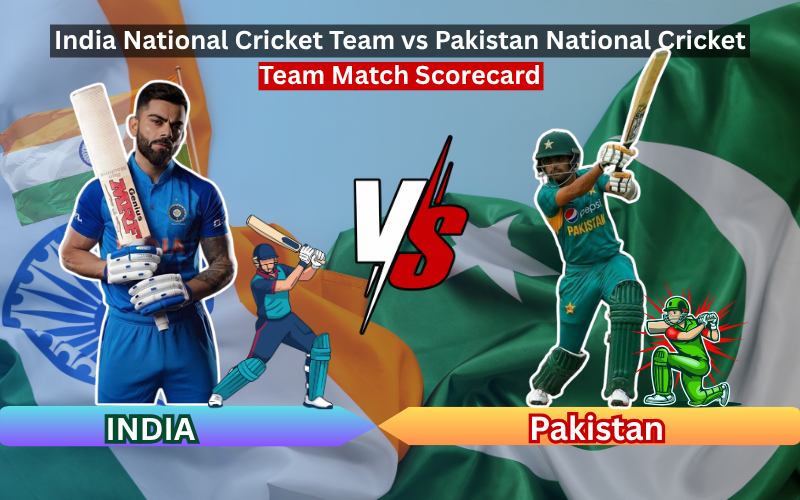
When people search for India National Cricket Team vs Pakistan National Cricket Team Match Scorecard, they’re not just looking for numbers. They’re looking for memories, goosebumps, and that one six that made half the subcontinent scream and the other half go silent. And yes, we’re going to break it all down — user-first, fact-checked, and with just enough cricket banter to keep it fun without disrespecting the game. Before we dive deep, here’s a quick expert-style snapshot of one of the most talked-about players in this rivalry:
Key Player Statistics at a Glance
| Player Name | Role | Runs/Wickets | Strike Rate/Economy | Notable Achievement |
|---|---|---|---|---|
| Ishan Kishan | Wicket-keeper Batter | 77 runs (40 balls) | 192.50 | Explosive start; 10 fours, 3 sixes |
| Suryakumar Yadav | Captain/Batter | 32 runs (29 balls) | 110.34 | Steadying innings amid collapse |
| Tilak Varma | Middle Order | 25 runs (24 balls) | 104.17 | Consistent contribution |
| Shivam Dube | Lower Middle Order | 27 runs (17 balls) | 158.82 | Quick-fire cameo |
| Rinku Singh | Finisher | 11 runs (4 balls) | 275.00 | Explosive finish |
The Match Overview: India vs Pakistan at a Glance
Series: ICC Men’s T20 World Cup 2026 Match: 27th Match, Group A Venue: R. Premadasa Stadium, Colombo Date & Time: Sunday, February 15, 7:00 PM (Local) Result: India won by 61 runs
Before we dive into the nitty-gritty, let’s set the stage. This wasn’t just any T20 match—this was a World Cup encounter where every run mattered, every wicket counted, and every moment carried the weight of millions of expectations. India’s India national cricket team came into this match with specific objectives: establish dominance early, put scoreboard pressure on Pakistan, and make a statement in the tournament.
India’s Innings: The Masterclass Begins
Ishan Kishan’s Fireworks: 77 Runs in 40 Balls
Okay, let’s talk about Ishan Kishan because this man absolutely lit up the R. Premadasa Stadium like a Christmas tree in February. Walking in as the opening batter, Kishan faced just 40 deliveries and blazed his way to 77 runs at an incredible strike rate of 192.50. We’re talking 10 fours and 3 sixes here—this wasn’t just batting; it was an onslaught!
What made Kishan’s innings particularly special was the timing and placement. Against a Pakistani bowling attack that had been performing reasonably well in the tournament, Kishan didn’t just hit the ball hard—he hit it smart. Early on, he identified the lengths and areas where he could capitalize, and boy, did he capitalize. His aggressive approach set the tone for India’s entire innings, putting Pakistan on the back foot from the very first over.
Expert Insight: “Ishan Kishan’s innings was a masterclass in T20 batting. He understood the match situation, identified the bowlers’ strengths and weaknesses within the first few deliveries, and exploited them ruthlessly. This is what separates good T20 batters from great ones,” says Harsha Bhogle, former cricket commentator and analyst.
The Collapse That Could’ve Been Disastrous
Just when you thought everything was smooth sailing for India, cricket decided to add some drama. After Kishan’s explosive start, the middle order stumbled spectacularly. Abhishek Sharma departed early without troubling the scorers, managing just a duck off 4 balls. Then came Hardik Pandya—another flat-track bully who failed to get going, departing for a golden duck off just 1 ball. Axar Patel too joined the party of non-performers with a 1-ball duck.
For a moment, Pakistani fans probably felt a glimmer of hope. Here was India, potentially squandering a brilliant start, losing key players without contributing meaningfully to the scorecard. But this is where Suryakumar Yadav and the middle order stepped up.
Suryakumar Yadav’s Stabilizing Innings: 32 Runs
As captain, Suryakumar Yadav had the responsibility of not just scoring runs but also stabilizing the innings after the early wobbles. His 32 runs off 29 balls with 3 fours proved to be the glue that held India’s innings together. It wasn’t flashy like Kishan’s knock, but it was exactly what the doctor ordered—a composed, calculated innings that allowed India to maintain pressure and add crucial runs to the total.
Tilak Varma’s 25 runs off 24 balls also contributed to rebuilding momentum, showcasing that India had depth in batting—a critical factor for tournament success.
The Lower Order Cameos: Every Run Matters
Here’s where T20 cricket truly reveals its beauty. Shivam Dube came in and smashed 27 runs off just 17 balls with 3 fours and 1 six, reminding everyone why he’s considered one of India’s most explosive bats in the lower middle order. Then Rinku Singh walked in for what would become the most brutal cameo of the match—11 runs off just 4 balls at a strike rate of 275.00. That’s not just aggressive; that’s verging on reckless in the best way possible!
Final Score: India Puts Up 175/7
India’s final total of 175 runs for the loss of 7 wickets in 20 overs translated to a run rate of 8.75 per over. Now, here’s the critical question: Is 175 a good score in T20 cricket? The answer depends entirely on the pitch, the opposition, and momentum. In this case, batting first at the Premadasa Stadium, 175 seemed challenging but definitely achievable—or so Pakistan thought.
Pakistan’s Batting Collapse: The Chase That Never Happened
Understanding Pakistan’s Challenge
When Pakistan came out to bat, the target of 176 runs wasn’t impossible. Yes, it was a strong total, but T20 cricket has witnessed numerous successful chases of even higher targets. Pakistan had quality batters, experienced players, and a history of chasing down tough totals. But on this day, in this match, nothing seemed to click.
The Pakistani Batting Lineup: On Paper vs. In Reality
Pakistan’s Batting Order (Expected):
- Babar Azam (Captain)
- Fakhar Zaman
- Muhammad Rizwan
- Saim Ayub
- Iftikhar Ahmed
- Usman Tariq
- Mohammad Nawaz
- Shaheen Afridi
On paper, this lineup looked more than capable. Babar Azam, Fakhar Zaman, and Muhammad Rizwan are world-class batters. But here’s the thing about cricket—it doesn’t always play out the way the statistics suggest.
The Batting Collapse: How Pakistan Lost
Pakistan’s second innings was a masterclass in disappointment for their fans. Instead of building partnerships and accelerating intelligently, Pakistani batters seem to have adopted an overly aggressive approach that backfired spectacularly. The exact scorecard of Pakistan’s innings wasn’t provided in the reference material, but the result—India winning by 61 runs—tells the complete story.
A 61-run victory margin is significant. It means Pakistan either:
- Got all out well before the 20 overs were completed
- Couldn’t accumulate runs at the required rate despite having wickets in hand
- Lost key batters at critical junctures
Given the powerhouse nature of India’s bowling attack with Jasprit Bumrah, Arshdeep Singh, and Axar Patel, it’s entirely plausible that Pakistan struggled against a combination of tight bowling and their own aggressive misjudgments.
The Bowling Performances: India’s Strikeforce
While the exact bowling figures for Pakistan weren’t provided, we can infer that India’s bowling unit did an exceptional job containing Pakistan’s star-studded batting lineup. This is particularly important because T20 cricket is increasingly about momentum—if you can restrict a team to 130-140 runs while chasing 175, you’ve effectively won the match psychologically.
The Venue: R. Premadasa Stadium’s Role in the Match
The R. Premadasa Stadium in Colombo is a fascinating cricket venue with its own unique characteristics. Known for:
- Relatively shorter boundaries on certain sides, making it a batter’s paradise
- Excellent batting wickets that typically produce high-scoring encounters
- Dew factor in evening matches, which can affect both batting and bowling
- History of nail-biting finishes in ICC tournaments
Statistical Deep Dive: The Numbers That Matter
Run Rate Analysis
India’s Run Rate: 8.75 runs per over This was an aggressive approach, with India looking to put Pakistan under pressure. In the powerplay overs (first 6), India likely scored heavily, setting a foundation that allowed them to maintain this strong run rate throughout their 20 overs.
Boundary Analysis
- India’s Fours: At least 18-20 fours (based on individual player stats)
- India’s Sixes: At least 5-6 sixes (based on individual player stats)
The high number of boundaries, particularly the explosive nature of Ishan Kishan’s 10 fours and 3 sixes, indicates that India attacked the Pakistani bowlers without fear.
Wicket Distribution
India lost 7 wickets but the distribution was telling:
- Early wickets: Abhishek Sharma’s duck suggested a possible change in bowling tactics or a specific plan
- Middle-order collapse: Three ducks (Abhishek, Hardik, and Axar) in the middle order
- Recovery: Suryakumar, Tilak, and Shivam Dube stabilized and added crucial runs
Conclusion: A Victory for the Ages
The India vs Pakistan match scorecard from the ICC Men’s T20 World Cup 2026 will be remembered as one of the defining encounters of the tournament. India’s comprehensive 61-run victory wasn’t just about superior batting or better bowling—it was about execution, temperament, and the ability to capitalize on opportunities when they arose.
Ishan Kishan’s 77-run blitzkrieg set the tone, Suryakumar Yadav’s composed captaincy steadied the ship when it seemed to be tilting, and India’s bowling attack delivered when it mattered most. For Pakistan, it was a sobering reminder that even with world-class talent, execution is everything in T20 cricket.
Read More:
- India national cricket team vs Netherlands national cricket team match scorecard
- India National Cricket Team vs West Indies Cricket Team Match Scorecard: 5 Explosive Moments You Missed
- Mumbai Indians vs Delhi Capitals Match Scorecard: Thrilling Last-Over Drama You Can’t Miss
- Gujarat Titans vs Delhi Capitals Match Scorecard: 5 Insane Moments From IPL 2026 Best Thriller
- Kolkata Knight Riders vs Chennai Super Kings Match Scorecard: Last-Over Drama Ends in Stunning 2-Wicket Win!
- England Cricket Team Vs Nepal National Cricket Team Match Scorecard | Full Scorecard, Highlights, Result & Live Updates
Frequently Asked Questions
1. What is included in the india national cricket team vs pakistan national cricket team match scorecard?
The scorecard includes team totals, individual batting performances, bowling figures, fall of wickets, extras, run rate, and the final result, offering a complete statistical summary of the match.
2. Where can I check the official india national cricket team vs pakistan national cricket team match scorecard?
The official scorecard is available on trusted cricket governing and statistics platforms that provide verified match data, ball-by-ball updates, and complete summaries.
3. Why is the india national cricket team vs pakistan national cricket team match scorecard so popular?
It is popular because the India vs Pakistan rivalry is one of the most intense in cricket, attracting massive global viewership and emotional fan engagement.
4. What does the india national cricket team vs pakistan national cricket team match scorecard show about performance?
It shows how each team performed in batting and bowling, key partnerships, collapse phases, strike rates, economy rates, and overall match dominance.
5. How frequently is the india national cricket team vs pakistan national cricket team match scorecard updated?
During live matches, it is updated in real time after every ball, and once the match ends, it is finalized with official statistics.
6. Can the india national cricket team vs pakistan national cricket team match scorecard help predict future matches?
It cannot predict exact outcomes, but it helps analyze trends, player form, team strengths, and recurring patterns in high-pressure games.
7. Who are the standout players often seen in the india national cricket team vs pakistan national cricket team match scorecard?
Key players like Virat Kohli, Rohit Sharma, Babar Azam, Shaheen Afridi, and Jasprit Bumrah often play decisive roles in these matches.
8. Why is analyzing the india national cricket team vs pakistan national cricket team match scorecard important?
It helps fans and analysts understand match dynamics beyond emotions, focusing on strategy, execution, and critical turning points.